

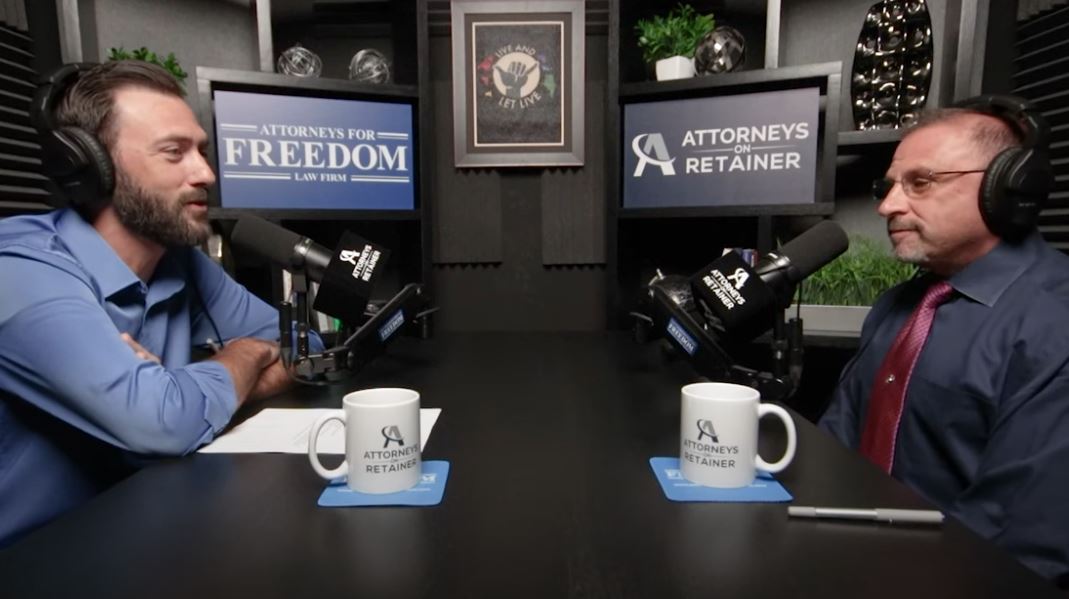
Andy
On today's episode of Fighting the State, we're talking about how cases get negotiated without the need for trial. You're going to hear two lawyers break it down. Stay tuned. This is attorney Andy Markell and attorney Mark j Victor with the partners of the Attorneys for Freedom Law Firm with another installment of Fighting the State. How you doing today, mark?
Marc
Fantastic, man. Every day. Yeah.
Andy
Yeah. We're talking about a big subject today, and it's a big subject because most cases in the criminal justice system actually end with some sort of a negotiated plea resolution.
Marc
This whole series deals with really big subjects, and I think it's unfortunate because the videos that we do where we critique shootings of some type or we're going back and forth with some company, those are the videos that get the big views. But these are really the most important videos. These
Andy
Are the ones most likely to affect people's lives because this is when the criminal justice system has actually charged you with the crimes where the rubber meets the road, as they say. Yeah, and I
Marc
Find just doing this over 30 years now, I find most people really don't know what it is criminal defense lawyers do. They don't know how defending a case works, what a trial's about. They don't know any of this stuff. And people sometimes come in and say, Hey, mark, can I just pay you to show up in court? You're only going to be there half an hour or 15 minutes or something. And it's just like, where do I begin with all? What would you want me to argue when I get there? Oh, I might have to read something first and prepare or file a motion, something like that. So yeah, this series is really important and I'm glad we're doing a different installment on each major topic because yeah, with negotiations, given that most cases settle, this is a really, really important video for people to understand.
Andy
And when we say most cases settle just by the numbers, it's something like 95 to 96% average of cases settle without the need for a trial. I think maybe there's some misconceptions perhaps because of TV or pop culture or movies that every case that's charged ends up in some sort of a dramatic courtroom showdown at trial. It's just not the case in the real world.
Marc
People who are actually charged with major felonies, they don't want to go to trial, they just want the thing over. And I think it's important. I mean, in almost all cases, they're going to offer you a plea even though you don't have no right to a plea, and that people don't just take a plea if it's not the best possible plea. I talk to clients all the time and I say, look, if I was in your shoes and I was going to take a plea, I would want to know that this is it. This is the best possible deal I'm ever going to get on the case. And then obviously, you got to compare that to what are your chances if you go to trial, what are you looking at if you lose that trial? It's about getting full information to people. In fact, sometimes when they come in, I tell them, look, you're really paying me to get you two pieces of information.
Marc
We don't have either one right now. Number one, what's the best possible deal we're ever going to get on this case when we've hit the bottom of the barrel, this is it. What's that deal look like? And then number two, what does trial look like? What's the evidence? What are the chances I'm going to walk if I don't, what am I looking at? What's the sentence going to look like? So this is dealing with really that first piece of information going back and forth. We're probably still in the discovery state, but we have a pretty good idea at this point what the evidence is going to be, who the witnesses are, kind of what the trial looks like. And so now it's about the negotiation.
Andy
That's right. Yeah. Our role as criminal defense attorneys is really to get the client to that crossroads where they're looking at here's the absolute best. I have confidence that this is the absolute best plea resolution. This is what trial looks like. And then we explain the risks and benefits of both sides, and the client makes the decision on which road they want to go down. Maybe they want to go down the safe route that's going to have some headache and aggravation maybe with the plea, or maybe they want to throw the dice oftentimes with the years of prison, and that's worth it to some clients. And that's their constitutional right to exercise. And we love trials. So our role is not to what we think all we can do is share, here's what we think is best, but we don't get to drive the car. At the end of the day, it's the client's freedom that's on the line.
Marc
And it's really tough sometimes because we've both been in this position many times where you really want to take the case to trial. This would be a great one to try, but there's a lot of risk on board too. And the client says, I just really don't want to take this risk and you feel like we probably win this thing. And sometimes I talk to them about percentages. I'm never going to give you a 90% chance. But what if I could? And even then people are like 10% chance that I'm going to go to prison, 10% chance I get convicted, and usually they're going to want to take the bird in hand, but sometimes people surprise us. They have different risk tolerances. I don't want to substitute my risk tolerance for a client's risk tolerance. On the other hand, I will say this, every trial I have ever lost in my entire career has been a situation where the client has ignored my advice to take the plea and instead said, I want to go to trial. So there's something to be said for if you're paying a lawyer a bunch of money to give you advice, you might take the advice seriously.
Andy
Yeah. You said something really telling too, which is that when we get to that crossroads where we've now laid everything out on the table and filed all the motions we needed to and presented all the mitigation, we're going to talk about that all in detail in a minute. But when we're at that crossroads and now we're educating our client of here's what it looks like. If you take a plea, here's what it looks like if the case goes to trial. Those two things are related, the strength of the plea, we expect to be reflective of how strong our case is at trial. Dude,
Marc
This is such a good point, right? Because this is why you never really get to try a great case, because if your case is really strong, imagine the very clear case of self-defense. We present that very clear case of self-defense, that prosecutor knows they're going to lose that case, and they might try to get a plea. They might say, Hey, look, take a half a loaf here rather than nothing at all. And so you're right. To the extent that they think they're going to lose, we get a better plea to the extent they think either A, we're going to win. This is an easy slam dunk, or B, this lawyer's never going to go to trial. This is a lawyer who doesn't try cases or something like that. They're not going to give a very good plea. So it really is the job of the criminal defense lawyer to convince that prosecutor, number one, we like trial.
Marc
And usually that's my opening line. Hey, this is going to be a super fun trial. I can't wait to try this case. So they're like, Ugh. And then number two, we might win. If we go, this isn't going to be just a matter of put the cop on the stand and say, what happens next in four different ways? And you're going to walk this thing in for an easy layup guilty verdict, we might walk our guy. And if the prosecutor's really concerned about that, they got the power to make it go away. Sometimes. I liken this to playing poker, right? Imagine you're playing poker, but one little twist in the game, one of the parties gets to see the cards of the other person. This is why you get prosecutors sometimes who say, I never lost a case. I'm a great prosecutor. Well, not really, right?
Marc
Imagine the poker player who gets to look at the other person's cards and then decide whether they want to play the hand or pass. That's kind of the position the prosecutor is in. And to be fair, there are some cases that really are in a gray area and you don't know. And frankly, there are some self-defense cases like that where it's a real gray area and the question of what's reasonable, which is the ultimate question in the self-defense case, we don't really know. And so those are the ones you'd like to try. But also those are the ones with the highest risk. And usually people will take a plea. That's why you see high 90% range of plea bargains.
Andy
So what people should be getting from this really is that the prosecutor holds all the cards in negotiations in many, many, many of the cases. And the reason is because the prosecutor has this crazy disparity of plea bargaining power. The prosecutor has a lot of powers, and some of those powers include certain enhancements that they can add to a case at any time that all of a sudden make the case mandatory prison. There's enhancements for if you commit multiple offenses on different dates, all of a sudden it's mandatory prison. If they allege this is a dangerous crime, which is very common in gun cases, in different jurisdictions, priors, bam, all of a sudden mandatory prison priors, bam, all of a sudden mandatory prison, if you lose a trial, gang enhancements, dangerous crimes against children, the list goes on and on and on, and the prosecutor holds all these cards.
Andy
So it's really your defense attorney's job to convince the prosecutor you're going to lose. There's a chance you're going to lose if you take this to trial. And when you understand kind of the guts of the criminal justice system and how it works, it becomes clear why this is, and I have to kind of disillusion some of my clients sometimes when they come into the office and I'm explaining to them this whole negotiation process leading up to trial, and I have to tell them a tough truth about the American justice system, which it's really based on. It's not really based on justice. It's based on self-interest. And when I say it's based on self-interest, I mean of everybody involved. The defendant is obviously thinking about themselves and their future. The defense attorney is thinking about their client and keeping their client out of trouble. But the prosecutors thinking about themselves too, to a large extent. Here's the reason why prosecutors' offices are oftentimes very hierarchical, where you move up and down the totem pole based on your results in cases, and something that typically reflects poorly on a prosecutors when they spend a whole bunch of the state's time and resources to bring a case just to have it dismissed at trial or dismissed pursuant to a pretrial motion or something like that by one of us pesky defense attorneys, that doesn't look very good for a prosecutor or
Marc
Not guilty at trial, even worse.
Andy
So bottom line is if a prosecutor actually believes that your criminal defense attorney has a good chance of acquitting the defendant, they're going to be highly incentivized to offer some sort of a lower level plea to try to get rid of the case.
Marc
And one other point here, and to me this is borderline unethical for the prosecutor to do, but they do this on a fairly frequent basis where the prosecutor will say, alright, here's a plea, but it's only open for the next 30 days. And you might be saying, you know what? Look, I don't have all the evidence yet. We haven't interviewed this guy. We haven't interviewed that guy. There's other things we're trying to learn about the case. Sorry, the plea is only open for 30 days or two weeks or one week
Andy
Or a day. I've had prosecutors say, all right, you've convinced me, but this is a one day offer. Your client has to take it by 5:00 PM today.
Marc
Yeah, this is really what contributes to the imbalance of power. The prosecutor really is the most powerful person in the system, more powerful than the judge. They could dismiss the case at any time. They can bring whatever charge they want a higher charge. If they want a lower charge, they don't have to make a plea. They can make any plea. They can put expiration dates like we just talked about on the plea and those expiration dates. Sometimes they're driven by good faith. Hey, we're backed up in the system. We're trying to clear out a lot of cases really early. So day one of the case, here's your plea. It's only open for two weeks. And you're like, we haven't interviewed anybody yet. We don't really know what the case is about. Sorry, you got to make a deal right now and further, if you don't accept this deal, we're never giving you this deal again. And any deal we give you later is going to be substantially worse. This is sort of, it's coercion, right? It really is
Andy
100%.
Marc
To be fair, it's legal coercion. It's legal coercion. In fact, I've had clients in court when the judge gets to that question, is anybody forcing you or threatening you to take this plea? Says, yes, the prosecutor, well, sir, other than that. And so they don't see that as coercion. That's not going to be coercion. That's just the facts of life in terms of making a tough choice. Sometimes that plays to our advantage as well. If they want to come in really quick, they might not know about that prior. That's in some other state. Yet that makes the case way worse. They may not know about another witness who's going to say some horrible thing for our case. Sometimes the case is worse than the prosecutor recognizes, and they kind of shoot themselves in the foot by offering an early plea that you got to take with a quick acceptance. And I've been on the good side of that as well, where we've hustled into court to take the plea, and then the prosecutor's like, ah, too
Andy
Bad. They realize some new evidence down the line or something new comes to light where they're like, oh, shoot, I could have gotten a higher level of a conviction kind of thing. So
Marc
There's really a lot of nuance here, and there's no substitute for just having experience in this
Andy
Area. But there's an interesting thing here too that I think we should spend a moment. How is it that a prosecutor can get away with this type of conduct of these short deadlines and everything like that that we just described? Well, the answer is because defendants in the United States of America are not entitled to a plea offer. There's nothing in the Constitution that says the prosecutor is required to offer you a plea. Now, there's a nuance. There are ethics rules that guide the conduct of prosecutors. And many of those ethics obligations include a duty to try to resolve a case by using as little of the state's resources as possible and to act as efficiently as possible and to resolve things in the interest of justice. So arguably, one could construe an obligation to engage in plea negotiations from those other obligations. But it ain't clear. It ain't clear that a prosecutor has to offer anybody a plea offer. It's seen oftentimes as, Hey, look, we're doing you a courtesy right now by offering you this 10 year plea deal when you're looking at 25 years for your shooting case. We're doing you a favor. You're welcome. Let us know if you want to take it
Marc
And to always try to be fair. I hope we have a reputation by this point of, as I like to say, calling balls and strikes. It would be a mistake to try to lump all prosecutors together. No doubt. There are some excellent pro. And when I say excellent, I mean really committed to justice where they'll say, Hey, the plea offer is open only to this point here. And then we say back, Hey, a new issue has arisen. We think we need to do an interview here. And the prosecutors say, wow, that is an important issue. I'm going to extend the plea offer because I think that's a very important person to interview. There are other prosecutors on the other side of the road who will flatly say, and I know this. I'm just saying for the people listening, look, man, if you make me work on this case, if you make me have to respond to any motions, if you make me have to sit down and go through interviews, if I got to spend time on this thing, that's it.
Marc
I'm taking the offer away. I think that's borderline unethical, but that's probably also a minority of prosecutors. It may also be a minority on the extreme other end too. The one that's truly looking for justice and will say, Hey, I'm going to, sometimes you say, give me this plea because we have this very good defense. I say, you know what? I'm going to dismiss the case because I think that is a good defense. That's rare. I've also had prosecutors, and I should just say this too, where prosecutors made me a plea offer and I said, great, lemme get back to you. I talked to my client, client accepts it. I say to the prosecutor, my client will accept the plea. And prosecutor says, I don't remember making you that offer. I don't think I ever made that offer. And I said, well, you did. And the prosecutor will say, mark, if you're telling me I made that offer, then I'll honor it.
Marc
But I don't have any notes. I have no, and I've said Yes, and prosecutors have honored that. So there are very honorable prosecutors out there. In fact, I go so far as to say most of them I can make a handshake deal with. We have philosophical differences on the state over the law, but most of them, not all of them had some of them go back on their word and be proud of that as well. Say, Hey, I could be a jerk and I'm just being a jerk. I've had that conversation as well. But every other group, imagine a bell curve. Most of them are in the middle. There's some outliers on one side who are real jerks and don't care about justice and really don't play fair and are just looking for a guilty. And then there's someone on the other side who really do take seriously the prosecutor's ethical responsibility not to win the case, but to seek justice.
Andy
Yeah, that's a really important point. The job of a prosecutor in the United States is not to win as many cases and get their conviction rate up as high as possible. It's to do actually do justice. And just to respond to one thing that you were saying where we've had experiences where there's a new prosecutor on the case, prosecutors can change within offices mid case. It happens all the time, and some prosecutors will not honor the deal that was offered by the previous prosecutor. We've had prosecutors literally say to us, well, I'm in charge now. I don't know what that other guy told you, but I'm in charge and this is my case. And I thought the previous prosecutor was way too nice to you and that we
Marc
Literally just had this
Andy
Right. He was way too lenient. And I'm driving this ship now. So we
Marc
Just had this in a case within the last 30 days.
Andy
Alright, so let's talk about what's involved in negotiations. And the way that we oftentimes break it down to clients is there's two main categories of stuff that we talk about when we're engaged in negotiations. Number one is legal arguments, and number two is mitigation arguments. You want to break down what those are, mark,
Marc
And they're both really separate things. So the legal arguments or arguments that tend to say to the prosecutor, look, you're not going to be able to get a guilty verdict in this case. We've got some kind of a defense, maybe. Maybe it's an alibi defense, maybe it's some other type of a defense, but you got problems with this case. There could also be legal arguments that would deprive a prosecutor of evidence in the case. This very common type of emotion here is a motion to exclude evidence, right under the Fourth Amendment, arguing what we call the exclusionary rule, which is in essence saying that the way that the police officer gathered that information was in violation of some aspect of Fourth Amendment law. It was a bad stop. It was a bad search. And the penalty for that under the Supreme Court's precedent map versus Ohio comes to mind is that the state doesn't get to the benefit of that evidence. If they've gathered it in violation of the US Constitution, some would say better to give a tort remedy, let the defendant sue the cop and get damages for that constitution
Andy
Of the law.
Marc
That's not the state of the law. Some say that should be the state of the law. But right now,
Andy
You and I have actually argued over this point, I love suppression. I love the rule of exclusion. I love fruit of a poisonous tree doctrine, and I know that you have some different opinions on it. Maybe we'll save that for another video.
Marc
Well, some people very quickly would say, why should the criminal get the windfall here? He still committed the crime, but the current state of the law is the person accused of the crime gets a windfall. So in the worst type of a case here, you imagine a bad traffic stop and the police officer opens the trunk and there's the dead body with the bloody knife right there with the fingerprints on it that matched the driver. Sorry, it's all going to be suppressed. And that guy who committed a murder is going to walk on that case because of the exclusionary rule, but it's also a very powerful tool for criminal defense lawyers, right? Yes. So we bring a motion to suppress, and there's some nuances in how we bring that, but those are the kind of legal arguments that you're talking about in the first part. Yeah.
Andy
Just to jump in there, because picking on the Fourth Amendment, which is my favorite amendment in criminal defense cases, and the one we tend to use, I'm
Marc
Not really picking on the fourth. I'm picking on how we deal with violations of
Andy
The Yeah, I mean the emotions to suppress are not limited to the Fourth Amendment. I mean, if there was a confession that was taken in appropriately, Miranda wasn't administered appropriately. There was some sort of interference collection of evidence that involved interference with somebody's right to counsel. I mean, even First Amendment stuff, I recently had a First Amendment case. So yeah, I mean everything is fair game, but this is motions to suppress or exclude evidence is basically us telling the court the state did something wrong and their investigation and they shouldn't get to benefit from those violations of my client's constitutional rights. Yeah.
Marc
Another point here, I just want to throw in, read the Fourth Amendment. If you haven't, I mean you should
Andy
Know this. Come on. American citizens know your rights
Marc
Among some other things. The Fourth Amendment protects your right against unreasonable searches in seizures, but it doesn't tell you what's unreasonable. So I sometimes like to restate the Fourth Amendment as fo and I restate, and you know what I'm going to say? This is very
Andy
Cynical.
Marc
I restate it in a way to make the point. Here's what the fourth Amendment could say and have the same exact meaning. The police officer or the government gets to search or sees anyone anytime, any place for any reason. They choose. So long as the government decides that what the government did was reasonable, right? I mean, that's what it is. And so in a way, there's a parallel here to self-defense law because at the end of the day, we have all these different rules on self-defense. At the end of the day, it's like asking the jury, Hey, ladies and gentlemen, you've heard everything. Now tell us if what the accused did was reasonable. If it is, that's a valid act of self-defense. If it isn't, that's not self-defense. Same with Fourth Amendment law, search and seizure. If what that police officer did in the stop, in the search, in the questioning, if they decide that that was reasonable, it's going to pass fourth Amendment muster.
Marc
So you could see there's a lot of litigation. It's very case driven, and it's a really fertile area to make arguments to a prosecutor to say, Hey, we think you're going to lose. I mean, take the example I made. The bloody knife in the body is in the trunk. Well, if we make a strong argument that you're going to lose all that evidence, you got nothing left, that case is going away and that guy's going to walk, you're going to let a murderer walk. That guy's going to be really forced to compromise that case. Exactly. To the extent that the prosecutor believes we might win that fourth Amendment motion to suppress evidence.
Andy
So right now, we've been, up until this point in the legal arguments, we've been talking about basically government wrongdoing during the investigation that can result in penalties against the government. But even if the government does everything right in their investigation, the cops follow all the protocol. There's no constitutional problems. Other things that we're talking about during negotiations are just the case on its merits. Can the state prove every element beyond a reasonable doubt of the charge that our client is facing? And oftentimes, it's going to be a very, very fertile ground for negotiations, especially when there's justification statutes involved.
Marc
Yeah. So the other side of the equation is they did everything. They got a strong case. And sometimes there's both, right? Sometimes when we negotiate, we say, look, here are the legal issues, and we put all that out there. And then kind of part B is there are other things, what we call the mitigation. This is more like pulling at the heartstrings of the
Andy
Prosecutor, humanizing the client.
Marc
Now, if the prosecutor doesn't have a heart that this is a problem, which sometimes is the case, but I have good information to believe most of them are human. And so if they are human and they have a heart, you can tug at that heartstring. And here we're talking about things like, look, this is the kind of mom he had. This is the kind of dad he had. He's got some mental health issues. He was acting in a heat of passion. Look what he was going through. He was just diagnosed with deadly cancer or something.
Andy
Family member just died or something tragic happened in his world, or he is struggling with drug addiction. There's all kinds of different mitigation things that while completely irrelevant to the question of whether or not the state can prove its burden beyond a reasonable doubt with respect to the charges, can still help in negotiation. Yeah, I
Marc
Don't want to minimize that stuff. I mean, some of that stuff can be important. There's also other things here that we bring in. He served in the United States Marine Corps and he served honorably and he was put into a hostile combat environment. The guy's got PTSD, or sometimes there can be honorable things about a person. Here's 50 character letters that talk about what a great guy this one is. This is so out of character, the kind,
Andy
Here's their history, no convictions. Here's what his career plans was. It's a college student on a scholarship. It's somebody who has a decorated career who's now trying to move forward in life.
Marc
In fact, in the federal system,
Andy
Community ties, family ties. There's so much
Marc
In the federal system when you're dealing with the federal sentencing guidelines, there's actually a formal departure for aberrant conduct. In other words, what this case is about is so out of the norm for this person, this person's 60 years old, has never committed a crime. Here's this one thing they did. Give them a little bit of a break because the conduct is just so out of character. Now, I mean, don't get confused on these. These are not things that say the person isn't guilty of the crime. It's not something that we let somebody off for, but it's like, okay, can we give the person a little bit better plea for some of these reasons? And oftentimes you can tug on the heartstring and the prosecutor say, yeah, I think this guy deserves a little bit of break. And what they're tugging against is treating everybody equally right? On their side, there's, look, justice is blind. We want to treat everybody in the same way. And so our argument is this person is in a different category. Let's treat everybody in that category the same way. So these are the kinds of things we go back and forth on when we negotiate with the prosecutors.
Andy
Yeah, mitigation definitely hits different prosecutors to different extents, right? You and I have had very reasonable prosecutors who when they are presented with the entire context of a person's life and history and background and future, and what was going on in the world at the time of the incident, have said, you know what? In the full context, I want to take it easy on your guy. You've convinced me to take it easy on your guy. On the flip side, I've literally had prosecutors tell me in the past, Andy, I don't care if your guy cured cancer yesterday. What does that have to do with whether or not he committed the crime? We treat everybody equally in this jurisdiction. This
Marc
Is really where good lawyering comes in. I mean, good lawyering. People always think about it at trial, and it's true. You have to do a good job at trial. If you don't have a threat to go to trial and do a good job at trial, if you haven't gone and won some big cases and given them some black eyes in the past, you lose some respect. So as a defense attorney, you want to go to trial, even selfishly, just for that reason alone. But as we said at the beginning, most cases don't go to trial. And so there's a lot of really good lawyering that is about presenting the case in a certain light to the prosecutor to say on one hand, look, we think you're going to lose. Here's why. And on the other hand, look, even if you don't lose, here's a bunch of mitigation stuff you should consider treat this guy differently than everyone else who's charged with this kind of a crime for these reasons. And that's what the negotiations is about. And sometimes you get an unreasonable prosecutor, and you also have to be savvy enough to know when to say, hit the eject button on this prosecutor. I'm going to go speak to his supervisor, or her
Andy
Supervisor happens often,
Marc
And to go all the way up the chain as far as you can go. We have had meetings with elected prosecutors on cases right up to the top dog and on many occasions to try to get a better plea. And you have to have a defense attorney with the sort of horsepower to go up the chain and to make the case to the higher ups, the ones at the end of the day, who make the
Andy
Decision. Yeah, I find that oftentimes when you go up the chain of command and you talk to the supervisor, the bureau chief, somebody higher up, their pride as on the line, as that trial level prosecutor is very connected to the case and focused on winning, and this is my case, and I got to get a victory here. Oftentimes you can find somebody more reasonable and detached from it on an emotional level up the chain who's willing to give you a better deal.
Marc
There's a little bit of nuance in how you do that as well, right? Because lots of time the assigned prosecutor is going to get a little butt hurt. Oh, now you're going to go talk to my boss about the job I'm doing. And so if you could present anyways, look, we respect your position. I hope you understand. We wouldn't be doing a good job for our client if we didn't kind of fish it up the chain a little bit. And so if they're present, we might say, look, your prosecutor's doing a good job, but we think that there are some things here that should be looked at a little closer, something along those lines. If you don't get what you want, you don't want to lose what you got. And so you have to be very careful about getting that prosecutor on some vendetta against your guy because you went over the prosecutor's
Andy
Head. Yeah, absolutely. So when we get to that point in negotiations where we've gathered all those great legal arguments, which we get by going through the evidence very carefully and looking at the case law and drafting motions and presenting it all, and then when we get to the point where we have our mitigation package complete with character letters and learning about our client's background in the context of the situation, we put it all together oftentimes in a document called a deviation request. And just to kind of explain what that is, most prosecutors' offices have kind a, for lack of a better words, a policy chart where they basically say, when somebody is charged with this type of a crime, with this many priors and this type of enhancements, here's the plea offer. Here's the standard plea offer that our office gives in these types of cases. So a deviation request is just that we are asking them to deviate from their normal policy of plea negotiations because of all those strong legal arguments and the strong mitigation.
Marc
The flavor of this, of course, is look what you guys normally do in these cases. We totally understand that's very appropriate, whatever, whatever. But we want you to understand this is a completely different situation than the typical situation. That's what a good defense attorney is trying to do is paint their client or the incident, or maybe even the way the law hits sometimes the argument is, look, the law, well, this technically fits. It wasn't really calculated for this kind of conduct. It technically fits, but it should be outside because the spirit of the law is trying to prohibit this kind of conduct, not the kind that is at issue here. So sometimes you can make arguments like that, and sometimes prosecutors say, I don't care. It fits within the letter of the law. That's it. So you really got to be nimble enough to negotiate.
Marc
You're dealing with a different pro. People sometimes will say, are you familiar with litigating cases in this county? Okay, that only gets you so far because every prosecutor is different. And then there are times where I deal with a prosecutor at one occasion. I say, wow, what a jerk. And on another occasion, oh, super friendly, super nice, easy to deal with. It could be a function of how's their life going at the moment? You have a case with them, how busy they are, how other people are treating them, and maybe even what reputation you have established, right? I mean, the reputation I think we have established here with the people who watch these videos. It's exactly the same reputation that we have worked very hard to establish, not just with prosecutors, but also judges. We approach cases professionally, but aggressively, we're going to be aggressive, but not to the point where they're going to hate us and not want to work with us. We want them to respect us. We want them to feel like if I was ever charged with a crime, I'd want those lawyers over at the Attorneys for Freedom Law Firm because they're professional, they're very sharp, they're good. They advance arguments that are solid arguments. They don't bring bs. And when they go and argue it, they're going to be prepared and professional, and they could persuade a judge on these points. We've
Andy
Had a number of times over the years where prosecutors, cops, judges, other people involved in the justice system have come and asked us to represent 'em based upon the job they've seen us do for our clients. That always makes me honored.
Marc
Yeah. I've represented other criminal defense lawyers as well who get charged with crimes and prosecutors, and I've had judges personally call me, even federal judges, get me on the phone and say, Hey, I got this situation. I'd like you to represent this or that person. That's the best. I mean, look, I was asked to speak at the court reporters convention recently because one of the court reporters who was the president of the organization said, we got to get Mark Victor in here. To me, court reporters, they sit there and watch everybody all day. So if you can get the respect of the court reporters association, that says something. And so I think we're doing something right at our law
Andy
Firm. Yeah, absolutely. Any final thoughts on negotiations? Mark?
Marc
I think we've successfully negotiated negotiations here. No, but there's a lot that goes. I think people, hopefully they got the flavor of this isn't something you open up a handbook and do step one, step two, step three. It's something you just got to have a feel for
Andy
In terms of you have to respond to every single unique situation organically. As you said, you got to be nimble because you don't know what type of a prosecutor you're dealing with. You don't know to what extent different legal arguments and different mitigation is going to be persuasive to that person. And not all prosecutors are created equal. So you have to adapt and you have to create kind of a customized approach for each and every client. You got to be
Marc
A little bit like MacGyver, right? You got to be creative. You got to come up with stuff. Sometimes we get these cases where you look at, it's like, ah, geez, it's clear. The guy did it. Everybody saw him do it. He admitted to doing it. All the evidence suggests he did it. We still got to come up with something. We can't just go in there with hat in hand and say, okay, give us the regular deal. We got to bring something creative to the table so we can at least make a good faith argument that we're not afraid to go to trial here, and if we do go, we might win. Or at least get something better than you are charging right now. Maybe a lesser included or something like that. Or even while you can't argue jury nullification, you might get the jury to feel bad for the person. And sometimes juries do crazy things. There's always that risk on both sides of a case that a jury's going to do something that you never expected. So sometimes you're just playing off of that as
Andy
Well. Your comment reminds me of the common question that criminal defense attorneys get. I'd be surprised if there's a criminal defense attorney out there in the United States that doesn't get this question at least a few times from friends and family, which is how can you defend somebody and represent somebody that you know is guilty? And in fact, we oftentimes do represent people who we know are guilty factually of the crime of which they're charged. But a very, very good question to ask and return to that is, do you believe that the punishment always fits the crime as charged? Do you believe that all of the laws are perfectly calibrated in our system to give the exact right amount of punishment? Okay. How could you possibly represent that person when you knew that they were guilty of, I don't know, possessing the marijuana or something like that? Yeah, I'm happy to do it because do you think prison is an appropriate sentence for possessing something like that? So a huge role that we have as criminal defense attorneys is not just to get our client acquitted or prove their innocence, but it's also to make sure that the punishment fits the crime. It actually is reflective of the conduct. And oftentimes in our system with mandatory minimum sentences and enhancements and everything like that, tons of stuff are horrendously over penalized in this country.
Marc
Yeah, I mean, it's a great answer, and I give that answer sometimes too, which is, look, just because the person did it, there's still a big question about what should the proper punishment be, but it's not the best answer. And as well as I know, the best answer is, and I know sometimes people say, oh, slimy defense attorney, you're going to defend somebody. It's easy when you say possession of marijuana, there are lots of other crimes out there that people don't feel the same way about. Think about crimes involving children and sex crimes and violent crimes, and do we do those as well when we know they're guilty? Absolutely. Absolutely. We do. Yeah. And the reason we do is because we care about a free society. You cannot get a free society unless you are going to give a fair trial to every single person who is accused of no matter what they're accused of, right?
Marc
Because what's the alternative here? The government makes an accusation. Now we parade you off into prison. Sorry, that's not a fair trial. That's not a free society. So in our world, if the government's going to put you in a cage on our watch, they're going to have to dot the i's and cross the T's, and if the bad guy we represent, actually we do our best job, and that person gets convicted and goes to prison, okay, we still sleep. Okay? In that case, we fight every single thing. We can fight as aggressively as we can, but that's the way the system is supposed to work. We have a certain role in the system as criminal defense lawyers, and it's to make sure before the government puts you in a cage, every single person, and this is why it's the most heinous cases, right? Think about it like in a free speech context. Yeah. Everybody's for free speech till somebody says some horrendously offensive thing. That's the time you defend freedom at the edges. The same is true here for due process in a fair trial. Sure. The marijuana smoker who we know is guilty. Yeah, we'll defend that guy. What about the child molestation case?
Andy
Yeah. The one I would be most excited for in the conversation today is that hypothetical you gave earlier about the body with the bloody knife, with the fingerprints that the defendant found in the trunk. This is why I love suppression and the exclusionary rule, because the idea here is that the state can't just kick down any door or open any trunk or burst open anywhere that they want without probable cause. They have to follow their own rules that they impose upon their citizens, and we punish them for that. And what's the alternative? If we say there should be no punishment, we know the guy's obviously guilty. That's the day we become a police state. Oh, okay. The government can just search anything or kick down any door. So what we do, you're absolutely right, mark. What we do is so much more important than the individual case that we're working on. We're fighting for a freer society.
Marc
You've baited me a little bit here, so I'm going to respond to what you've said. Look, I completely agree. The government should follow these rules, and if they don't, there should be punishment. The only issue on the table is what should the punishment be? There are other punishments out there that are available besides suppressing the dead body in the trunk,
Andy
Like civil remedies.
Marc
Yeah. You might say, look, let's hit 'em where it hurts. Maybe there's a big tort remedy and maybe the person who's subject to the bad search gets a bunch of money. This will actually discourage the police department from having their officers do bad searches and it doesn't let the bad guy walk. Okay, now take off my criminal defense lawyer hat because I love suppression motions and getting people out of the situation, but putting on my citizen hat, I don't want that guy to walk. I want that guy to get convicted, and I still want to punish the officer who made a bad search, which by the way, he may have done in good faith because sometimes the Supreme Court might split five to four on a question of what's a reasonable search? How do you expect that police officer to get it right? I'm not sure suppressing that the bloody knife with the dead body in the trunk is the right answer if we can still appropriately punish them and get justice on the other hand. So that's essentially my
Andy
Take. My defense attorney hat and my citizen hat are exactly the same when it comes to this issue, which is, as a citizen, I want the government to feel the pain when they violate its citizen's rights. And what better way to fuel the pain than letting somebody guilty go? Ouch. Okay. Citizens say, now that there's somebody dangerous back in our community and everything like that, the pressure is now on the government now more than ever before from its citizenry saying, don't screw up the cases. Do not screw up the cases. It's unacceptable. We'll replace you, we'll remove you. There's got to be a mechanism to put pressure on the government to the greatest extent possible that I think money damages just aren't going to accomplish. Well,
Marc
You said what better way can they feel the pain, take money out of their pocket? We'll come
Andy
Back to this.
Marc
Take money out of their pocket.
Andy
I know I baited you a little bit. I think this deserve, deserves its fun conversation. Yeah. This deserves its whole video. I'd love to have that conversation. This has been a great conversation about negotiations for the most part, and a very, very important, crucial part of the criminal process.
Marc
It's also fun to get a little disagreement on here where I hate it when people come up to me and say, oh, mark, I'm so sorry. I disagree with you. I'm like, what do you mean? What do you mean you're sorry? We're Americans. We get to disagree on things. Let's just do it in an agreeable
Andy
Way. We agree probably on 90% of most important things, but that's not where we spend our conversations. Whenever you and I are off camera and having conversations, we talk about the things we disagree with in a respectful manner. That's right. There's a concept for you. Maybe people can have respectful disagreements. We were just filming a video yesterday, a shooting reaction video, where we disagreed with somebody whose opinion, another lawyer whose opinion we respect greatly, I think is a great lawyer. I think he got that issue wrong. You got to do these things respectfully and bring it civilly. Yeah.
Marc
We should be bigger than the current population is right now. Throwing mud at everybody, insults and look, if you want to disagree, do it in a respectful, gentlemanly, mature. I would say American kind of a way. It's okay to disagree. This is how we learn. And by the way, it's okay if somebody disagrees. It's okay if they convince you you are wrong on something. I remain open-minded on everything, and if somebody changes my mind on something, I thank them for improving my position. Now I can go forward with an improved position.
Andy
Yeah. Well, oftentimes we can change the mind of a prosecutor who wasn't going to offer us a good deal, and now because of our It happens, we're getting the legal issues and the mitigation, we can negotiate a good result for our client.
Marc
Thanks for bringing it back home. I'm
Andy
Doing my best to circle it back around. Alright. Thank you very much for tuning in today, guys. In this episode of Fight in the State, go and check out attorneys on retainer us to learn all about our self-defense program and what it can do for you. Check out attorneys for freedom.com to learn all about our law firm and how we defend our clients. If you like this video, make sure to leave a comment down below, subscribe to the channel, and share with a friend. Until next time, this has been Attorney Andy Marcantel and attorney, mark j Victor. Peace.
Credit: Marc J. Victor and Andy Marcantel, Attorneys On Retainer
