

You know that feeling when you're not at home? You start to worry about things like whether or not your coffee maker is off, if the security alarm was set properly, and what exactly might be going on with each individual child. It's exhausting!
The best thing we can do as parents, as people, and as homeowners (especially those who work outside their house) is to install monitoring systems so they will always feel safe - no matter where life takes them.
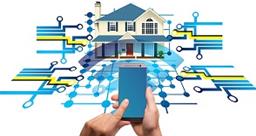
What Is a Smart Home?
A smart home is a great place to live, where you can control everything from your lightbulbs and thermostat all over the house remotely from anywhere with an internet connection using a mobile device.
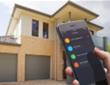 Devices in a smart home are all interconnected through the internet, giving you total control over every aspect of your property from anywhere at any time. With these innovations, it's possible to enjoy peace of mind and convenience without ever having to be away!
How Smart Homes Work?
With a smart home, it is easy to forget any worries by looking at a smartphone. 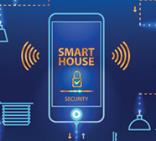 Connecting devices and appliances to your house allow them to communicate between one another and you. All electrical devices used in the home are connected to our networks (Wi-Fi). When someone asks a command through the voice, remote, tablet, or phone, their home will react. These advanced appliances not only come with specific self-learning skills that allow them to learn our schedules and adjust as needed, but they also give us simple, easy-to-use controls that let us have more control over how we use energy in our homes.
Fun Fact
- Smart heating and cooling systems can save smart home users 50% in energy use.
What are examples of Smart Homes?
- Ring Smart Home Cameras are versatile wireless indoor/outdoor security cameras with wireless batteries that capture motion-triggered videos from the cloud. At Frogworks we utilize Ring, and it allows us to see who is at the door before we answer.
- Smart Fire Alarms. These wonderful devices not only set off one alarm but are all connected to each other to warn everyone sooner. Some incorporate emergency lights made to help see in smoke, which can make finding one’s way out easier during emergencies.
- Smart thermostats are used to control your central air more efficiently. This can lead to lowering your electric bill.
- One of my personal favorites is the popular smart robot vacuum device. These smart home device machines can be programmed with Wi-Fi and specific tasks such as picking up dirt from one room.
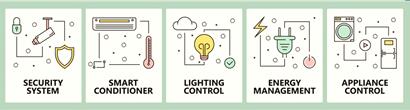
Smart Home Benefits
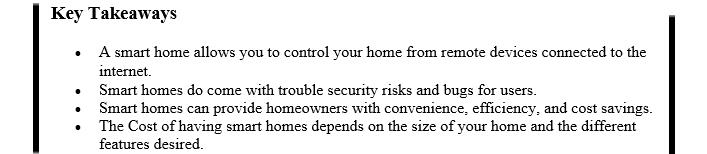
- Smart homes allow you to have greater control of your energy use, all while automating things like adjusting temperature, turning on and off lights and adjusting irrigation based on the weather.
- Control of house from your couch.
- Smart Home can alert you of anything going on and can provide an enormous number of security solutions to help when an emergency arises.
- A smart home is also 54% more likely to sell on the market.
- In some cases, smart homes unlock doors, call the fire department, and light the way to safety.
- Smart homes can pinpoint areas where you’re using more energy than you need to, allowing you to cut back in those areas and save money.
Smart Home Drawbacks
- Security risks and bugs continue to curse users of technology. For example, hackers have the possibility to gain access to a smart home through internet-enabled applications.
- Cost of Intelligence & Installation.
- A reliable internet connection is crucial.
- Technology can become outdated and need maintenance.
- Compatibility problems between devices.
Measures to mitigate the risks of such attacks include protecting smart appliances and devices with a strong password, using encryption, and only connecting trusted devices to one's network.
